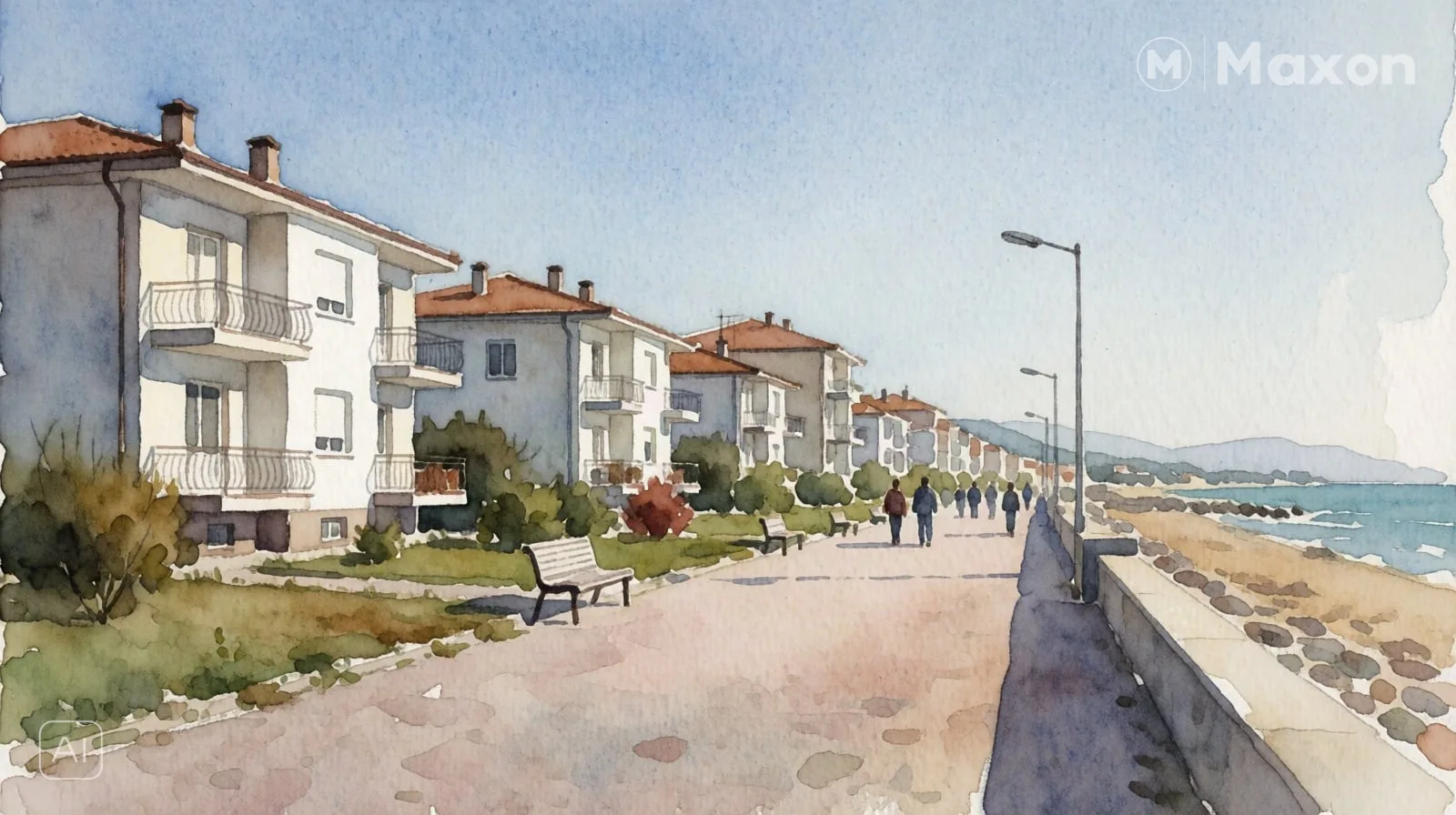
The search for a seaside home in Bulgaria rarely begins with choosing a specific building or square footage. The most important question every prospective owner faces is the location itself. The Bulgarian Black Sea coast offers a wide variety of atmospheres, amenities, and lifestyles: from the lively boulevards of regional administrative centers to small coastal towns and secluded villages.
To make a choice that leaves you satisfied in the long run, you must first clarify the primary purpose of your purchase: a property solely for summer holidays, a permanent residence, or a place to spend several months a year.
In this practical guide, we examine the three main types of coastal locations, their advantages and limitations, as well as the crucial factor of logistics and airports.
1. Small Coastal Towns: A Balance Between Peace and Comfort
Places like Ravda, Pomorie, or the Burgas neighborhood of Sarafovo attract buyers looking for a peaceful setting, sea breezes, and the absence of unnecessary urban stress.
Atmosphere and Everyday Life
Here, building developments are generally lower-rise, streets are quieter, and the distance to the beach rarely requires a car journey. Days are spent strolling along seaside promenades, visiting small family bakeries, and dining at fish restaurants where the staff quickly get to know you. The heavy traffic of major boulevards is absent, and the sound of car horns is replaced by the crash of waves.
In Sarafovo, for example, you get the feel of an independent resort settlement with a sandy beach and a marina, even though it is administratively part of Burgas. Pomorie blends the heritage of an old fishing town with modern walking areas, balneotherapy, and long sandy stretches. Ravda offers classic holiday ease, flat terrain, and immediate proximity to larger resort areas.
Who Is This Choice Best For?
- Buyers seeking a holiday home with minimal noise.
- Those looking for a relaxed pace outside the busy summer peak.
- Families who want their children to play freely without constant, heavy vehicle traffic.
What to Keep in Mind in Winter?
Outside the active summer season, life in these settlements slows down considerably. A portion of seasonal shops and restaurants close their doors until the following spring. Although essential supermarkets, pharmacies, and medical clinics operate year-round, the selection of cultural events, fitness centers, and specialized services is more limited. For more extensive administrative tasks or specialized medical care, one must travel to the nearest regional city.
2. Major Cities: Burgas and Varna for Year-Round Comfort
If you are looking for a full urban rhythm, an exceptionally well-developed social infrastructure, and the ability to reside year-round without compromise, a residential complex or neighborhood in Varna or Burgas is the logical choice.
Infrastructure and Amenities
Varna and Burgas provide everything one expects in a modern European city:
- Major public and private hospitals and medical centers.
- Elite schools, kindergartens, universities, and language academies.
- Theaters, opera houses, cinemas, art galleries, and year-round events.
- A wide variety of restaurants, cafes, shopping centers, and sports facilities.
- Regular public transit and well-maintained urban public spaces.
The Sea Garden in Burgas and the Seaside Park in Varna act as lush green buffers between urban buildings and the sea, offering miles of pathways for recreation and exercise.
Who Is This Choice Best For?
- Families with school-aged children who require quality education and extracurricular activities.
- People planning to work, run a business, or live on the Black Sea coast throughout the entire year.
- Buyers who value an active social life and a rich cultural calendar during the winter months as well.
Drawbacks and Trade-Offs
In a major city, the classic seaside holiday atmosphere is less pronounced. A residence may be situated farther from the shore, and city beaches are significantly more crowded in the summer. The environment carries the typical hallmarks of urban living: denser traffic during peak hours, more difficult parking, and higher background noise levels compared to resort towns.
3. Remote Villages and Secluded Coves: Seclusion in Nature
Along the Bulgarian Black Sea coast, certain areas remain well off the beaten path of mass tourism—in the far south toward Strandzha, along the rocky northern coastline, or in small stretches between Varna and Burgas.
Wild Nature and Absolute Tranquility
In these pockets, beaches are often framed by forests, sand dunes, or picturesque cliffs. Even at the height of July and August, there are no overcrowded promenades or high-rise hotels. For lovers of fresh air, swimming in secluded coves, and peaceful evenings on a private patio or veranda, this is an ideal setting.
Challenges for Longer Stays
This type of property requires a realistic assessment of daily needs:
- Transportation: A private car is not merely a convenience here, but an absolute necessity. Public transport to smaller villages is very infrequent.
- Services: Nearby shopping is usually limited to small grocery stores carrying basic goods. Any substantial shopping, home repairs, or medical care will require travel.
- Social isolation: After the end of September, these areas empty out almost entirely. For extended or year-round stays, the lack of people and activities can lead to a sense of monotony and isolation, particularly for younger individuals or families with children.
The Logistics Factor: Proximity to Varna and Burgas Airports
For international buyers, as well as Bulgarians living abroad, travel time to and from the airport is one of the most critical factors when selecting a location. The region's two main air gateways are Burgas Airport and Varna Airport.
Burgas Airport
Located right next to Sarafovo, it provides very quick access to the entire southern coastal region. Driving to nearby locations such as Pomorie, Ravda, or central Burgas takes very little time. This makes the area exceptionally convenient if you land late in the evening or fly in frequently for weekend visits.
However, if you choose a property in the southernmost parts of the coast, you should plan for a significantly longer drive or transfer after landing, which can be tiring following a long flight.
Varna Airport
Serving the northern half of the coast, it offers year-round connections to European destinations. Travel from the airport to central Varna neighborhoods or nearby suburban areas is fast and straightforward along main arterial roads. If your property is situated further north, traveling along the coastal road is also relatively easy, though it does require additional travel time.
Flight Seasonality
It is essential to check flight schedules before making a final decision. During the summer months, both airports handle dozens of charter and scheduled flights daily. In the winter season, the number of direct international routes is lower, with several destinations requiring a layover or travel via the capital.
How to Determine Your Buyer Profile
To make an informed decision, match your lifestyle habits against the day-to-day realities of each location:
- Purely holiday use (a few weeks per year):
Small coastal towns (Pomorie, Ravda, Sarafovo) are an excellent choice. They offer an authentic seaside feel, straightforward property maintenance, and quick airport access.
- Year-round living or remote work:
Major cities (Burgas, Varna) provide stability, social life, schools, and high-level medical care, which are indispensable during the autumn and winter months.
- Seeking a retreat in nature:
If urban noise is exhausting and you want complete rest surrounded by greenery and silence, look for a home in the smaller villages to the south or north, but be prepared for car dependency and higher logistical costs.
Legal and Practical Steps When Buying
Once you have narrowed down the geographic area, the formal purchasing process begins. At Maxon, our team advises buyers to proceed systematically and without rushing:
- Visit the location off-season: Before signing a preliminary contract, visit the chosen area in late autumn or winter. This allows you to experience the actual environment—street lighting, open shops, heating reliability, and cleanliness—stripped of the summer resort glamour.
- Legal due diligence: Always retain an independent lawyer to investigate the property's title history, land status, and the presence of any encumbrances, mortgages, or pending litigation. Every detail regarding contracts, ownership, and maintenance fees must be verified and cleared by legal counsel.
- Building infrastructure: Check whether utility meters (electricity and water) are individual domestic accounts or shared commercial ones, and ensure the building has received its formal occupancy permit (Act 16).
Choosing a coastal home is not merely a financial investment; it is choosing an environment where you and your family will spend precious time. When you align your location with your true day-to-day lifestyle, your property will bring you peace of mind and enjoyment for years to come.