A Capital That Surprises and Inspires
Sofia is a city of remarkable contrasts, where millennia of history coexist seamlessly with the dynamic daily life of a modern European hub. Nestled at the foot of the mountains, the Bulgarian capital attracts international visitors with its unpretentious charm, rich cultural calendar, and abundant green spaces. For many, their first encounter with Sofia is unexpected: broad yellow cobblestones, Roman ruins beneath pedestrians' feet, the aroma of freshly roasted coffee, and the silhouette of a soaring mountain massif rising just above the southern horizon.
For anyone planning a short trip, an extended stay, or relocating here, Sofia reveals itself gradually. The city is in no rush to show everything at once; instead, it invites you on a leisurely stroll through diverse historical eras and contemporary urban spaces.
Millennia of Layers: From Ancient Serdica to Saint Sofia Basilica
Few European capitals boast such a dense and accessible archaeological heritage right in their core. The city's history unfolds literally at every step beneath today's streets.
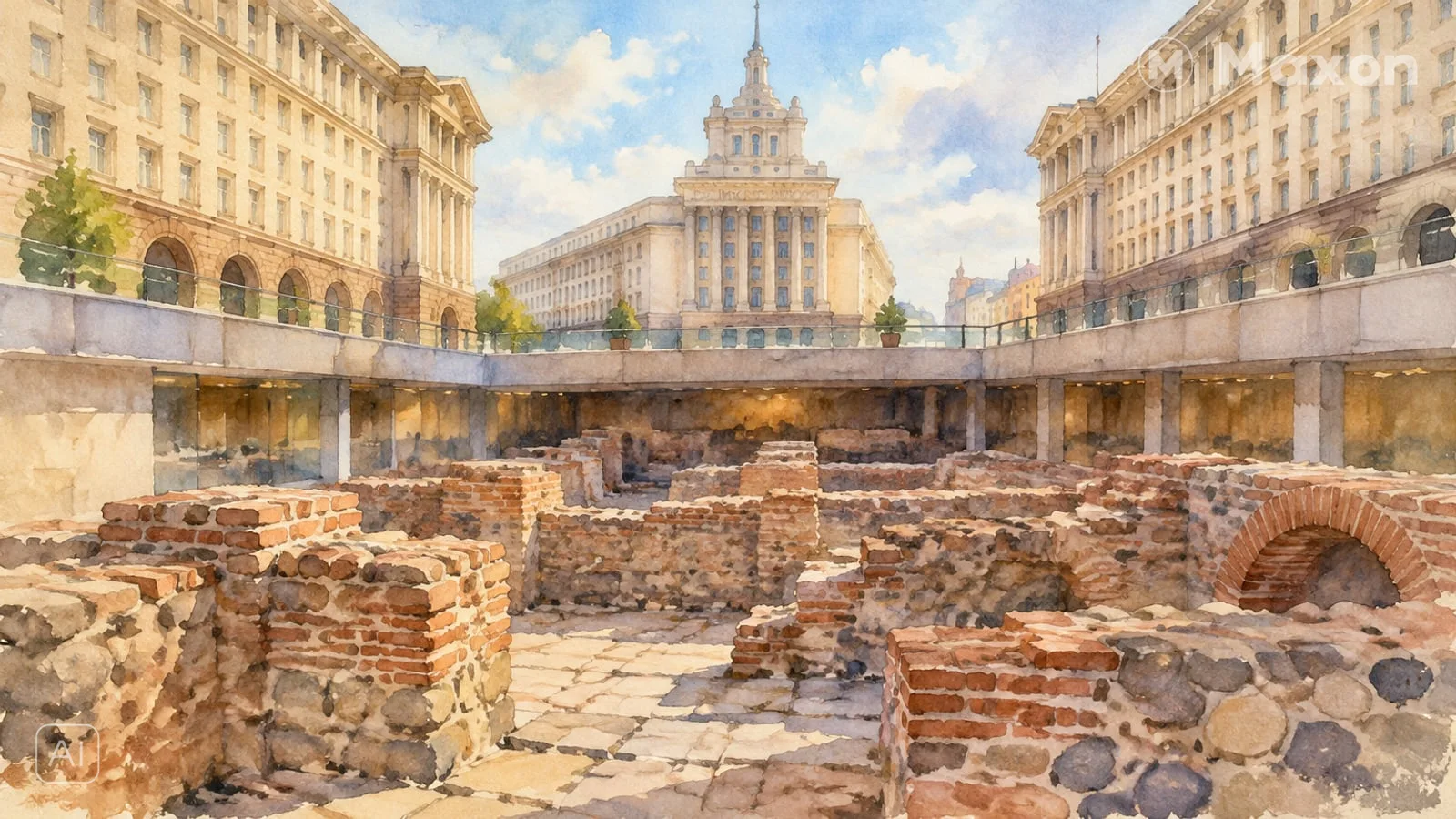
The Ancient Serdica Complex is situated beneath the central Largo plaza. Descending to the level of the ancient thoroughfares, visitors can walk along original Roman pavements dating back to when Emperor Constantine the Great referred to the city as "my Rome." Here you will find the remains of public buildings, mosaics, and drainage systems, skillfully displayed beneath glass domes and within open-air courtyards.
Just steps away, tucked inside the inner courtyard between the Presidency and a luxury hotel, stands the Rotunda of St. George. Built in the 4th century, this red-brick structure is Sofia's oldest preserved architectural monument. Its interior houses exceptional medieval frescoes, while the courtyard atmosphere offers a quiet sanctuary in the heart of a bustling administrative district.
Only a few minutes' walk away stands the 6th-century Saint Sofia Basilica. Erected during the reign of Byzantine Emperor Justinian the Great, this early Christian church has endured centuries of wars, earthquakes, and reconstructions, ultimately giving its name to the entire city. Today, beneath its foundations lies an extensive underground museum featuring dozens of ancient tombs and vibrant mosaics.
Grandeur and Gilded Splendor: St. Alexander Nevsky Cathedral
Without question, Sofia's most recognizable landmark is the Patriarchal Cathedral of St. Alexander Nevsky. Its gold-plated domes catch the sunlight, drawing the eye from across the city.
The foundation stone of this monumental cathedral was laid in 1882, with primary construction taking place between 1904 and 1912. Designed by the distinguished architect Alexander Pomerantsev, the cathedral was erected in honor of the Russian soldiers who fell in the Russo-Turkish War of 1877–1878.
The interior impresses with its vast scale: sprawling spaces of Italian marble, Brazilian onyx, exquisite frescoes by leading artists of the period, and massive chandeliers. The square surrounding the cathedral is a favorite destination for walks, photoshoots, and open-air events.
Civic Heritage and Classical Elegance
The central axis of the capital preserves the legacy of Bulgaria's post-Liberation revival. This area hosts institutions of profound history and distinctive architecture:
- The Historic National Assembly Building: Built in a Neo-Renaissance style and bearing the national motto "Unity Makes Strength," this landmark has served as the home of Bulgarian parliamentarism since the late 19th century.
- The Presidency: The building catches visitors' attention primarily for the ceremonial changing of the guard. Sentries in traditional uniforms draw crowds on the hour, every hour.
- Ivan Vazov National Theatre: One of Sofia's finest architectural gems. Designed by the renowned Viennese firm of Ferdinand Fellner and Hermann Helmer, it was completed in 1906 and inaugurated in early 1907. Its façade, adorned with Ionic columns, statues of Apollo, and gilded details, is reflected in the fountains of the City Garden—a cherished local spot for chess, conversation, and outdoor relaxation.
- Sofia University St. Kliment Ohridski: Founded in 1888 as the country's first institution of higher education. Its monumental main building stands out with Baroque elements and bronze statues of donor brothers Evlogi and Hristo Georgievi.
- University of National and World Economy (UNWE): Established in 1920, it is today a leading academic center for economic and social sciences, located in Studentski Grad.
The Urban Vibe: Vitosha Boulevard and Hidden Side Streets
To experience Sofia's true social rhythm, step into the pedestrian zone of Vitosha Boulevard—known locally simply as "Vitoshka." This is the lively heart of shopping and leisure. Rows of cafés, international and traditional restaurants, gelaterias, and fashion boutiques keep the avenue bustling at all hours. The hallmark of any walk down Vitoshka is the unobstructed view to the south, where the vista concludes with the dramatic green or snow-capped wall of Mount Vitosha towering directly over the rooftops.
Yet the authentic spirit of Sofia often lies just off the main avenue. The quiet side streets around Shishman, Angel Kanchev, Oborishte, and behind the former Royal Palace preserve the city's bohemian flair. Here you will discover:
- Cozy neighborhood bakeries and specialty coffee shops;
- Independent art galleries and bookstores;
- Artisan bakeries and boutique craft shops;
- Peaceful residential courtyards framed by 1930s architecture.
Along these cross streets, the city adopts a gentler cadence, neighbors greet one another, and the atmosphere welcomes long, unhurried afternoons.
Green Transitions: NDK and Park Culture
At the southern terminus of Vitoshka lies the sprawling plaza of the National Palace of Culture (NDK). Inaugurated on March 31, 1981, this complex is the largest congress and cultural center in Southeastern Europe. Its late-socialist monumental architecture continues to host major festivals, concerts, and exhibitions.
The park surrounding NDK, complete with cascading fountains, open terraces, and tree-lined promenades, serves as one of the city's primary meeting points. Families, students, artists, and rollerbladers gather here throughout the day.
Vitosha: Nature at Your Doorstep
One of Sofia's defining advantages over most European capitals is Mount Vitosha. It is not merely a scenic backdrop, but an active part of daily life. You can spend your morning in an office downtown and your afternoon hiking along pine-scented mountain trails.
Its highest elevation is Cherni Vrah, rising to 2,290 m above sea level. Numerous marked hiking paths lead to the summit, where panoramic vistas encompass the entire Sofia Valley and neighboring mountain ranges.
Nestled in the mountain foothills is the prestigious Boyana neighborhood, home to the Boyana Church—a medieval monument inscribed on the UNESCO World Heritage List. The church is celebrated worldwide for its realistic frescoes dating back to 1259, which art historians regard as a remarkable precursor to the European Renaissance.
Modern Business and Innovation: Business Park Sofia
Sofia is not only an administrative and cultural capital, but also the economic engine of Bulgaria. The city has established itself as a regional hub for technology, outsourcing, finance, and shared services.
The most prominent symbol of this contemporary commercial presence is Business Park Sofia, located in the Mladost 4 district. As the largest office park in Southeastern Europe, it is designed as a self-contained urban environment featuring dedicated infrastructure, artificial lakes, dining options, and recreation zones. The complex hosts regional headquarters and offices for major multinational corporations, including HP, Cisco, Allianz, KPMG, and many others.
This concentrated corporate landscape continues to attract thousands of international professionals who choose Sofia for both their career and lifestyle.
Navigating the City: The Metro Network
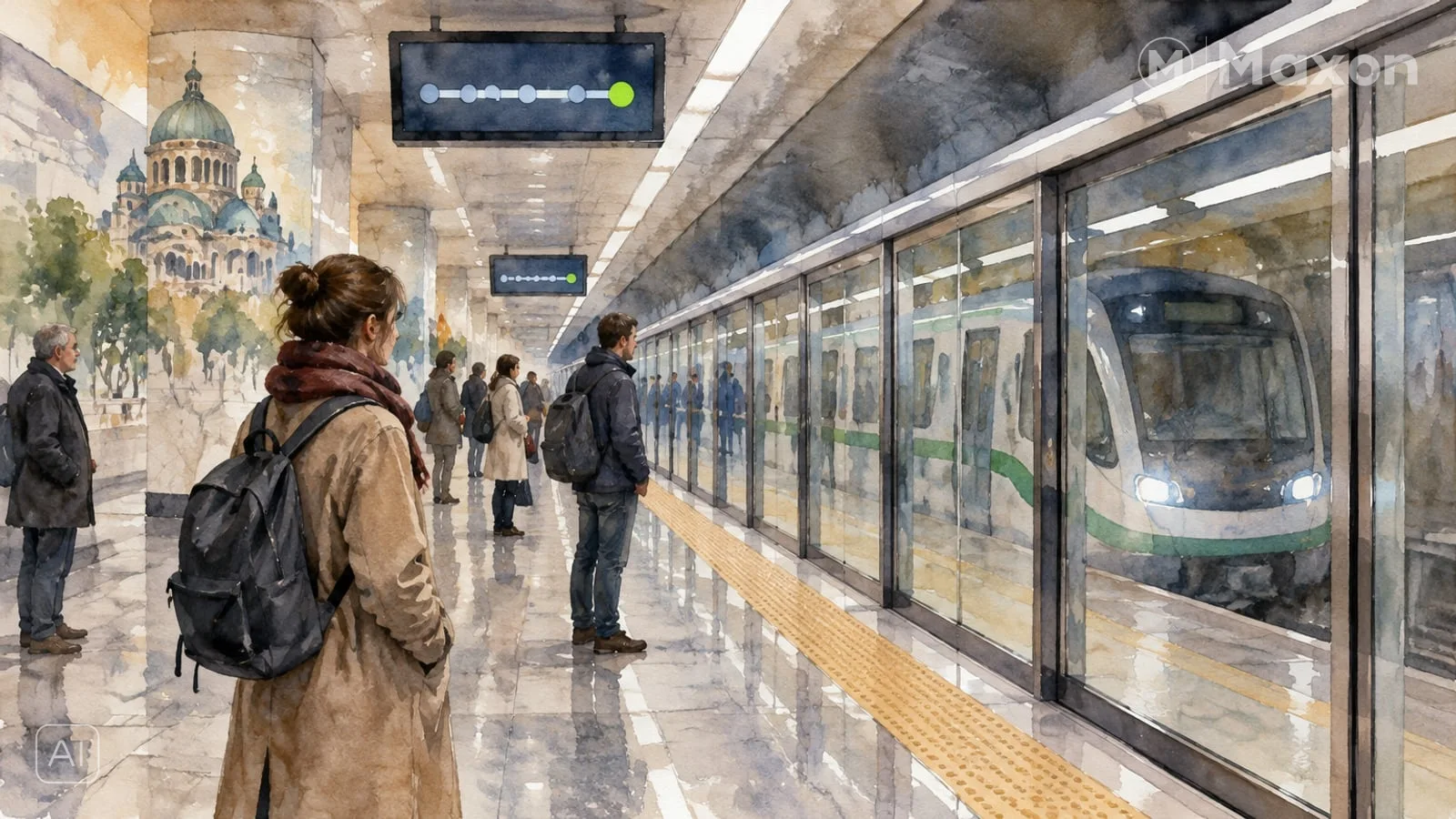
Efficient transit connectivity is central to Sofia's appeal. The backbone of the public transit system is the modern Sofia Metro, which continues to expand:
- The network consists of 4 lines (M1–M4), connecting major residential districts, business corridors, and the city center.
- Line M4 provides a direct, rapid connection from downtown to Terminal 2 of Sofia Airport, making travel and welcoming international arrivals remarkably straightforward.
- The primary interchange hubs are Serdika and NDK stations, offering swift and comfortable transfers between lines.
The metro allows you to cross the entire city in a matter of minutes, avoiding surface traffic during peak hours.
Living in Sofia: Career and Quality of Life
For international buyers and expatriates considering relocation, Sofia offers an exceptional balance. On one side is the momentum of a modern European business capital with competitive professional opportunities. On the other is an easygoing pace anchored by leafy parks, accessible culture, safe neighborhoods, and immediate access to nature.
When choosing where to settle, selecting the right neighborhood is essential—whether you prefer the historic ambiance of the city center near the cathedrals and theatres, the tranquility of the mountain foothills, or proximity to leading commercial hubs. The Maxon team possesses in-depth knowledge of Sofia's residential markets, helping international clients find the property that aligns perfectly with their lifestyle.
Sofia is a city that rewards the observant. It blends ancient heritage, present-day energy, and a green future in a way that allows newcomers to quickly feel at home.