If you stroll through a Bulgarian town or village in late October, a distinctive, unmistakable aroma drifts through the air: dry firewood smoke, caramelizing sweetness, and roasting red peppers. It is the unofficial herald of mid-autumn, signaling that families have gathered for the most delicious and unifying local tradition: preparing zimnina (winter provisions).
For an expat or someone new to the country, the sight of large cauldrons in backyards, neighbors perched on small stools around a pepper roaster, and rows of glass jars lined up on old newspapers might initially seem like an exotic relic of bygone eras. In Bulgaria, however, this is neither about sheer survival nor empty grocery shelves. Zimnina is culinary culture, a social ritual, and a cherished way to fill the home with security, connection, and warmth.
The Seasonal Rhythm: October Markets
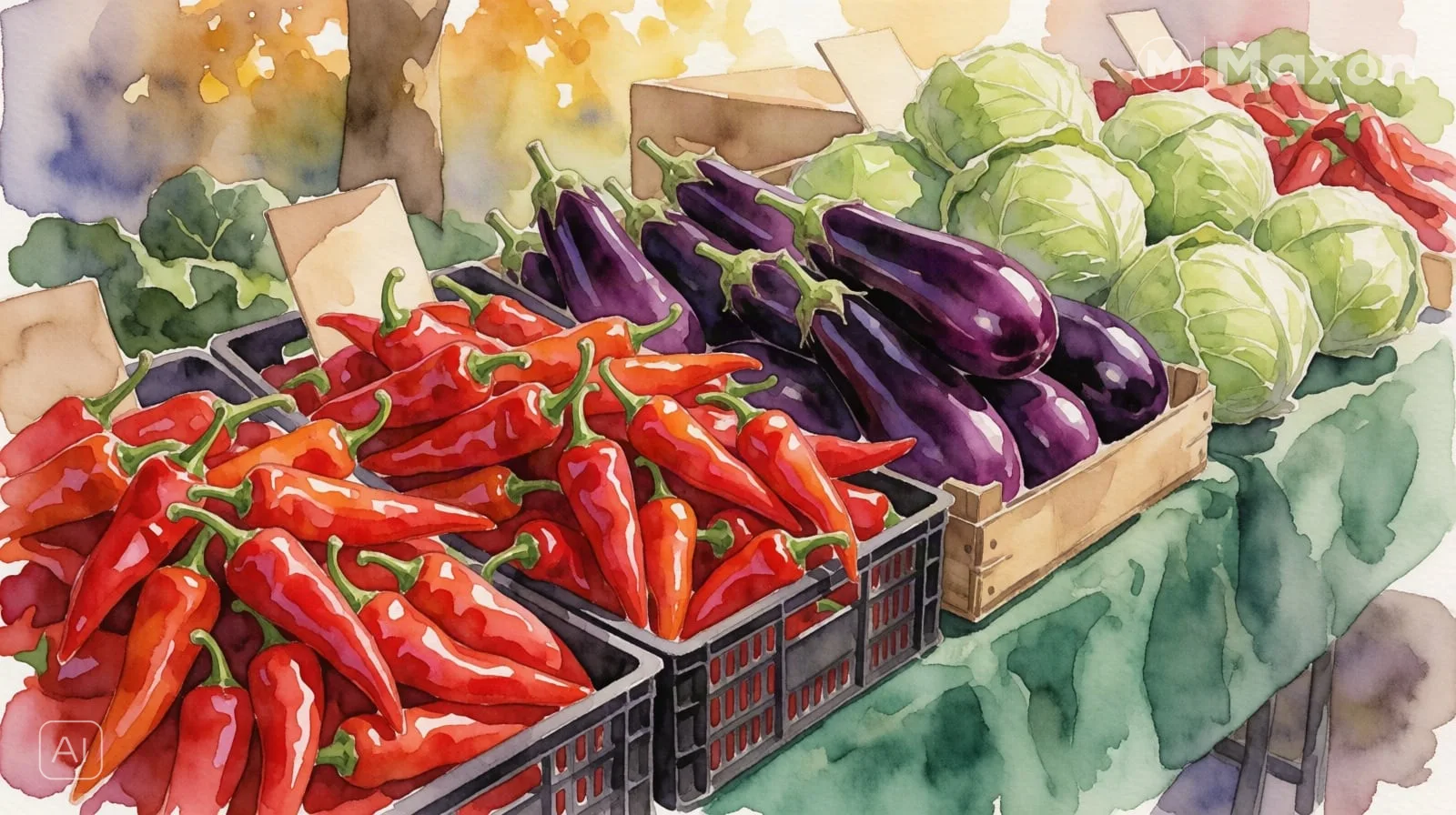
It all begins at the neighborhood open-air market. By late October, local markets across the country transform into a sea of vibrant colors: deep red kapiya peppers, glossy dark purple eggplants, crisp green tomatoes, petite cauliflower heads, pungent horseradish roots, celery leaves, and hefty sacks of dense winter cabbage.
Preparing winter preserves is never a matter of spontaneous supermarket runs. People browse the stalls, chat with growers, hunt for specific heirloom varieties, and often reserve full sacks of "roasting peppers" or crates of pickling cucumbers in advance. Shopping becomes an experience: small samples are tasted, debates unfold over whether the summer was sunny enough for the tomatoes' sugar content, and fresh herbs and aromatics are selected—flowering dill, braided garlic, and bay leaves.
Key essentials tucked into the trunk of nearly every Bulgarian family car during this season include:
- Red peppers (kapiya)—the soul of lyutenitsa and a freezer staple.
- Eggplant—dense, glossy, and fleshy, ready to be charred over open flames.
- Cabbage—medium-sized, tight heads destined for the barrel of fermented sauerkraut.
- Green tomatoes, cauliflower, carrots, and round kambi peppers—the backbone of famous Bulgarian pickled salads (turshiya).
- Quinces, apples, and late plums—for compotes and thick preserves fragrant with rose geranium.
The Shared Fire: How Preserving Brings Generations and Neighbors Together
Making winter preserves is rarely a solitary endeavor. Processing dozens of kilograms of produce demands time and patience, naturally bringing grandparents, parents, and children together in one place.
In village and house yards, open fires are lit beneath wide, shallow roasting pans called talpi. Lyutenitsa requires hours of non-stop stirring with a large wooden paddle to prevent scorching on the bottom. These hours pass with lively chatter, laughter, neighborhood updates, and sips of homemade wine or herbal tea. While older family members peel piping-hot peppers, younger hands wash jars or turn manual meat grinders to purée roasted vegetables.
In city apartment courtyards, the custom finds an urban counterpart. Shared gardens and spacious balconies host the iconic appliance: the chushkopek (a Bulgarian household invention specifically engineered to roast a pepper evenly on all sides in seconds). The aroma fills the neighborhood, and neighbors effortlessly step outside to chat, lend a hand, share a family recipe, or simply sample the first hot roasted pepper paired with white cheese.
Classic Recipes at a Glance: Where to Start
To experience this seasonal magic firsthand, you do not need fifty kilograms of produce. Even a handful of jars made in a modern apartment kitchen brings immense satisfaction.
Homemade Lyutenitsa
Lyutenitsa reigns supreme on the Bulgarian table. The classic version combines roasted, peeled red peppers, charred eggplant, and reduced tomato purée. The vegetables are finely ground and simmered in a wide pan over moderate heat with sunflower oil, salt, and a pinch of sugar. The mixture is cooked until a wooden spoon leaves a distinct, clean trail along the bottom of the pot. Ladled piping hot into clean, dry jars, it is tightly sealed and water-bath sterilized for about 15–20 minutes.
Tsarska Turshiya ("Royal Pickles")
This crisp, colorful pickle truly lives up to its noble name. Its foundation consists of chopped kambi (or sweet red peppers), cauliflower florets, sliced carrots, and celery stalks and leaves, packed tightly into glass jars. A brine of water, vinegar, salt, sugar, black peppercorns, and bay leaf is brought to a boil and poured hot directly over the raw vegetables. The jars are sealed immediately and turned upside down to vacuum-seal naturally without boiling.
Quince Compote with Rose Geranium
The golden fruit of October—the quince—lends remarkable delicacy to winter desserts. Scrubbed clean of downy fuzz, the fruit is cored, sliced, and placed into jars. Add a few tablespoons of sugar to each jar, a fresh leaf of rose geranium (indrishe) for its signature botanical aroma, and cold water to the rim. The jars are gently boiled for roughly ten minutes, leaving the fruit tender yet firm and fragrant.
How to Take Part as a New Resident in Bulgaria
Settling into Bulgarian life often happens through the kitchen. Bulgarians take immense pride in culinary hospitality. Here are a few easy ways to embrace the preserving season:
- Ask your neighbors for advice: If the fragrance of roasted peppers drifts from an adjoining balcony or courtyard, do not hesitate to say hello. Ask where they source their produce or what their secret is for crisp pickles. You will almost certainly walk away with a recipe, and very likely a tasting jar.
- Start small: Pick up an electric chushkopek (available at almost any local homeware store) or roast a few peppers in your oven. Try a quick batch of fresh, raw turshiya—it requires no canning bath and cures within days.
- Return the jar full: An unwritten rule in Bulgarian culture holds that if someone gifts you a jar of homemade jam or lyutenitsa, you should never return the empty glass. Fill it with homemade baked goods, nuts, or a delicacy from your own home country before handing it back.
Organizing the Home: Storage in Kitchens, Balconies, and Basements
The real charm of zimnina also rests on a practical consideration: where and how to store all these jars through the winter months? When designing everyday living spaces in a new home, smart layouts make a world of difference. At Maxon, we often observe the premium homebuyers place on functional storage—pantries, enclosed loggias, and dry basement storage units.
In the Kitchen and Pantry
If your home features a walk-in pantry adjacent to the kitchen, sturdy, shallow shelving made of solid wood or powder-coated metal works best. A shelf depth of 20 to 25 centimeters accommodates standard glass jars perfectly, keeping every label visible at a glance without anything disappearing into the back. Adding date labels helps you rotate your stock through the season.
On the Balcony
Balconies and terraces in Bulgarian apartments have long served as essential cold larders. However, jars need protection from two main elements: direct sunlight and sub-zero freezes that can crack glass.
- Floor-to-ceiling cabinets: Installing an enclosed cupboard on the shaded side of an open terrace shields vegetables and preserves from temperature spikes.
- Glazed terraces: An enclosed loggia creates an ideal buffer between outdoor winter chills and heated living spaces, maintaining a steady, cool ambient temperature throughout late autumn and winter.
In the Basement (Izba)
A dedicated basement storage room is the quintessential haven for zimnina, courtesy of its naturally stable, cool climate and total darkness. To keep jars pristine:
- Ensure proper airflow to prevent excessive humidity, which can rust metal lids.
- Use sturdy freestanding racks raised at least 10–15 centimeters off the floor.
- Organize by category: place fermented cabbage and savory pickles on cooler lower shelves, reserving upper shelves for sweeter fruit compotes, jams, and lyutenitsa.
When the first winter snowfall blankets the streets, few things feel cozier than stepping down to the pantry or cellar, selecting a homemade jar, and bringing the vibrant, sun-drenched flavors of Bulgarian summer and autumn straight to your table.


